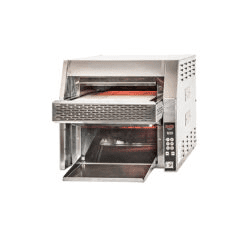
Conveyor-style commercial pizza oven with an open front and digital control panel.

How Much Does It Cost to Outfit a Commercial Kitchen in Canada in 2026

Table of Contents

Share:

Inquiry

Picture of Joshua Vinderine

Joshua Vinderine

Joshua Vinderine is the Inside Sales and Marketing specialist at Celco Inc., bringing 5 years of food service industry experience. Over the past 4 years, he has worked closely with dealers, consultants, and operators to champion Celco’s commercial food service equipment lineup, from new product launches to sales programs. Joshua combines hands-on product knowledge with a strong marketing mindset, offering insightful, experience-based perspectives on equipment trends, specification, and lifecycle value.

Opening a restaurant or foodservice operation in Canada means making one of the most capital-intensive decisions in the business: equipping the kitchen. The gap between a rough budget estimate and the actual cost of a functional, code-compliant, commercially equipped kitchen can run into tens of thousands of dollars. For operators who underestimate at the planning stage, that gap becomes a cash flow crisis before the first plate goes out.
Accurate budgeting for commercial kitchen equipment is not a back-of-the-napkin exercise. It requires understanding the cost of each equipment category, how those costs scale with the size of the operation, and where hidden expenses tend to surface after a purchase order is signed. This guide provides the framework Canadian foodservice operators need to budget with confidence in 2026.


Core Equipment Categories and Average Price Ranges

A fully outfitted commercial kitchen covers five primary equipment categories. Each has a wide price range depending on capacity, brand, and specification level. The figures below reflect current Canadian market pricing for new commercial-grade equipment in 2026.

Cooking Equipment

Cooking equipment is typically the largest single line item in a kitchen build.
  • A commercial range runs $3,000 to $15,000, depending on burner count and BTU output.
  • Combi ovens, which combine convection and steam cooking, range from $8,000 to $30,000 and are increasingly standard in mid- to large-sized operations.
  • High-speed ovens for quick service applications range from $5,000 to $20,000.
  • Fryers, griddles, and charbroilers add $1,500 to $6,000 per unit.

Refrigeration
Refrigeration is a category where under-specifying at opening creates costly replacement cycles within two to three years.
  • Walk-in coolers and freezers represent a significant capital investment, ranging from $8,000 to $25,000 installed for a standard single-unit configuration.
  • Reach-in refrigerators run $2,500 to $6,000 each.
  • Undercounter refrigeration adds $1,500 to $3,500 per unit.
Dishwashing
This category is frequently underbudgeted in initial planning, particularly for installation costs related to water treatment, drainage, and ventilation.
  • A commercial undercounter dishwasher starts at $3,500 and can run up to $8,000 for high-volume door-type machines.
  • Conveyor dishwashers for high-seat-count operations range from $15,000 to $40,000.

Prep Equipment
  • Commercial food prep equipment includes mixers ($2,500 to $8,000)
  • Slicers ($1,500 to $4,000)
  • Food processors ($1,200 to $3,500)
  • Work tables ($400 to $1,500 each)
  • A fully equipped prep area ($10,000 to $25,000 in total)

Ventilation
Commercial hood and ventilation systems are among the most consistently underestimated costs in a kitchen build. A standard exhaust hood with fire suppression, make-up air, and installation runs $15,000 to $45,000, depending on the cooking line length and local code requirements. Ventilation is a non-negotiable expense: no certificate of occupancy is issued without a code-compliant system.


Cost Breakdown by Restaurant Size

Cost breakdown infographic showing commercial kitchen equipment budget ranges for small café, 50-seat, and 100-seat restaurant operations in CanadaEquipment costs scale with seat count, service model, and kitchen throughput. The following ranges reflect full equipment packages for three common operation types in Canada in 2026.

  • Small Café (up to 30 seats): A small café or fast-casual counter service operation typically requires $40,000 to $75,000 in commercial kitchen equipment. This covers a limited cooking line, one or two refrigeration units, a commercial dishwasher, and a compact prep station. Ventilation requirements are reduced where the cooking program is limited to low-heat preparation.
  • 50-Seat Casual Dining: A 50-seat casual-dining restaurant is the most common build scenario in the Canadian market. Total equipment cost typically ranges from $100,000 to $175,000 for a fully specified kitchen. This includes a full cooking line with range, oven, and fryer; walk-in refrigeration; a door-type dishwasher; a complete prep station; and a code-compliant ventilation system. Installation and connection costs add 15 to 25 percent to equipment list pricing.
  • 100-Seat Full Service: A full-service restaurant with 100 seats requires a kitchen equipped for high-volume production across multiple menu categories. Equipment budgets in this range typically run $200,000 to $400,000, inclusive of a complete cooking battery, full walk-in refrigeration suite, conveyor dishwashing, combi oven, extensive prep capacity, and a full ventilation system engineered to the cooking load. Operations at this scale also require backup equipment and redundancy planning as part of the initial specification.


Four Hidden Costs Most Owners Overlook

The equipment list price is only part of the total outfitting cost. Four categories of hidden costs consistently surprise first-time operators and undermine budgets that were built on list pricing alone.


1. Installation and Connection Costs

Commercial equipment requires professional installation, gas line connections, electrical panel upgrades, and plumbing rough-in that are rarely included in equipment pricing. Plan for 15 to 25 percent of equipment cost as a separate installation budget line.

2. NSF Certification and Code Compliance

All commercial kitchen equipment in Canada must meet NSF International standards for food safety, and local health authorities conduct inspections before any restaurant can open. Equipment that does not meet standards must be replaced before occupancy. Sourcing from reputable commercial distributors with NSF-certified product lines eliminates this risk.

3. Delivery, Rigging, and Freight

Large commercial equipment requires specialized freight and rigging services, particularly for walk-in units and heavy cooking equipment. Freight and rigging costs of $2,000 to $8,000 are common on full kitchen builds and are frequently omitted from initial budgets.

4. Smallwares and Initial Inventory
Cookware, utensils, cutting boards, storage containers, and service equipment are not typically included in commercial kitchen equipment packages. Smallwares budgets for a 50-seat operation typically range from $8,000 to $20,000.


Equipment Financing Options in Canada

The capital requirement for a commercial kitchen build does not have to come entirely from owner equity. Several financing structures are available to Canadian foodservice operators in 2026.
  • Equipment Leasing allows operators to acquire equipment with monthly payments rather than a lump-sum purchase. Lease terms typically run 36 to 60 months, preserving working capital for operations and allowing equipment upgrades at the end of the term. Many commercial equipment distributors offer leasing arrangements directly or through financing partners.
  • BDC (Business Development Bank of Canada) Financing provides term loans specifically structured for equipment purchases, with repayment schedules aligned to the operational life of the asset. BDC financing is accessible to both new and established foodservice operators and does not require the same deposit structures as traditional bank lending.
  • Vendor Financing Programs offered through established distributors can provide deferred payment terms, bundled service agreements, and flexible structures not available through third-party lenders. Operators building a relationship with a national commercial equipment supplier should inquire about vendor financing as part of any large equipment acquisition.


How to Reduce Upfront Capital Without Sacrificing Quality

Three strategies consistently deliver the best capital efficiency on a commercial kitchen build without compromising on equipment performance or regulatory compliance.
  • Prioritize New on High-Wear Items. Refrigeration, dishwashing, and cooking equipment that runs continuously during service should be purchased new. The total cost of ownership on used equipment in high-wear categories almost always exceeds the savings within the first two years through increased service costs and energy consumption.
  • Specify Correctly for Your Volume. Over-specifying equipment for a launch operation is a common and expensive mistake. A combi oven rated for 300 covers per day has no performance advantage in a 50-seat casual dining kitchen doing 80 covers. Equipment should be specified for the actual projected volume with planned upgrade paths as the operation grows.
  • Partner with a National Distributor for Consolidated Purchasing. Operators who consolidate their equipment purchase with a single national distributor gain access to package pricing, coordinated delivery scheduling, single-point installation coordination, and warranty support from one accountable partner. Sourcing across multiple suppliers introduces coordination complexity and reduces leverage on pricing and service terms.

Celco supplies commercial kitchen equipment to foodservice operators, institutions, and equipment dealers across Canada, backed by over 50 years of industry experience, a national inventory network, and a certified service infrastructure built for the Canadian market.

Ready to build your equipment list? Request a custom equipment quote from the Celco team today.

Frequently Asked Questions

How much does it cost to outfit a commercial kitchen in Canada in 2026?

The cost to outfit a commercial kitchen in Canada in 2026 ranges from approximately $40,000 for a small café or counter service operation to $400,000 or more for a 100-seat full-service restaurant. The most common build scenario, a 50-seat casual dining kitchen, typically runs $100,000 to $175,000 for equipment alone, before installation, ventilation, and smallwares are added. Budget an additional 15 to 25 percent on top of equipment list pricing for installation and connection costs.

Ventilation systems, walk-in refrigeration, and commercial dishwashers are consistently the highest-cost line items relative to operator expectations. A commercial hood system with fire suppression and make-up air can run $15,000 to $45,000 installed. Walk-in cooler and freezer combinations range from $8,000 to $25,000 installed. These categories also carry the highest installation cost relative to equipment list price.

Used equipment can reduce upfront capital cost but introduces risk in high-wear categories. Refrigeration, cooking equipment, and dishwashers that have seen heavy commercial use carry a higher service cost probability and may not meet current NSF certification standards required by Canadian health authorities. Used equipment is most appropriate for low-wear items such as prep tables, shelving, and storage equipment, where condition is easier to assess and replacement costs are lower.

Canadian foodservice operators can finance commercial kitchen equipment through equipment leasing, BDC (Business Development Bank of Canada) term loans, and vendor financing programs offered by commercial equipment distributors. Leasing preserves working capital with monthly payments over 36 to 60 months. BDC provides structured term financing for equipment assets. Vendor financing through a national distributor may offer the most flexible terms for operators consolidating a full kitchen purchase.

The most important criteria for selecting a commercial kitchen equipment supplier in Canada are national inventory availability, NSF-certified product lines, warranty and service infrastructure, and the ability to supply and coordinate a complete kitchen build from a single relationship. Operators who source across multiple suppliers face coordination risk, inconsistent warranty support, and reduced pricing leverage. A national distributor with established relationships across multiple equipment categories provides the most reliable path to an on-time, on-budget kitchen build.

Share:

Inquiry

Picture of Joshua Vinderine

Joshua Vinderine

Joshua Vinderine is the Inside Sales and Marketing specialist at Celco Inc., bringing 5 years of food service industry experience. Over the past 4 years, he has worked closely with dealers, consultants, and operators to champion Celco’s commercial food service equipment lineup, from new product launches to sales programs. Joshua combines hands-on product knowledge with a strong marketing mindset, offering insightful, experience-based perspectives on equipment trends, specification, and lifecycle value.