

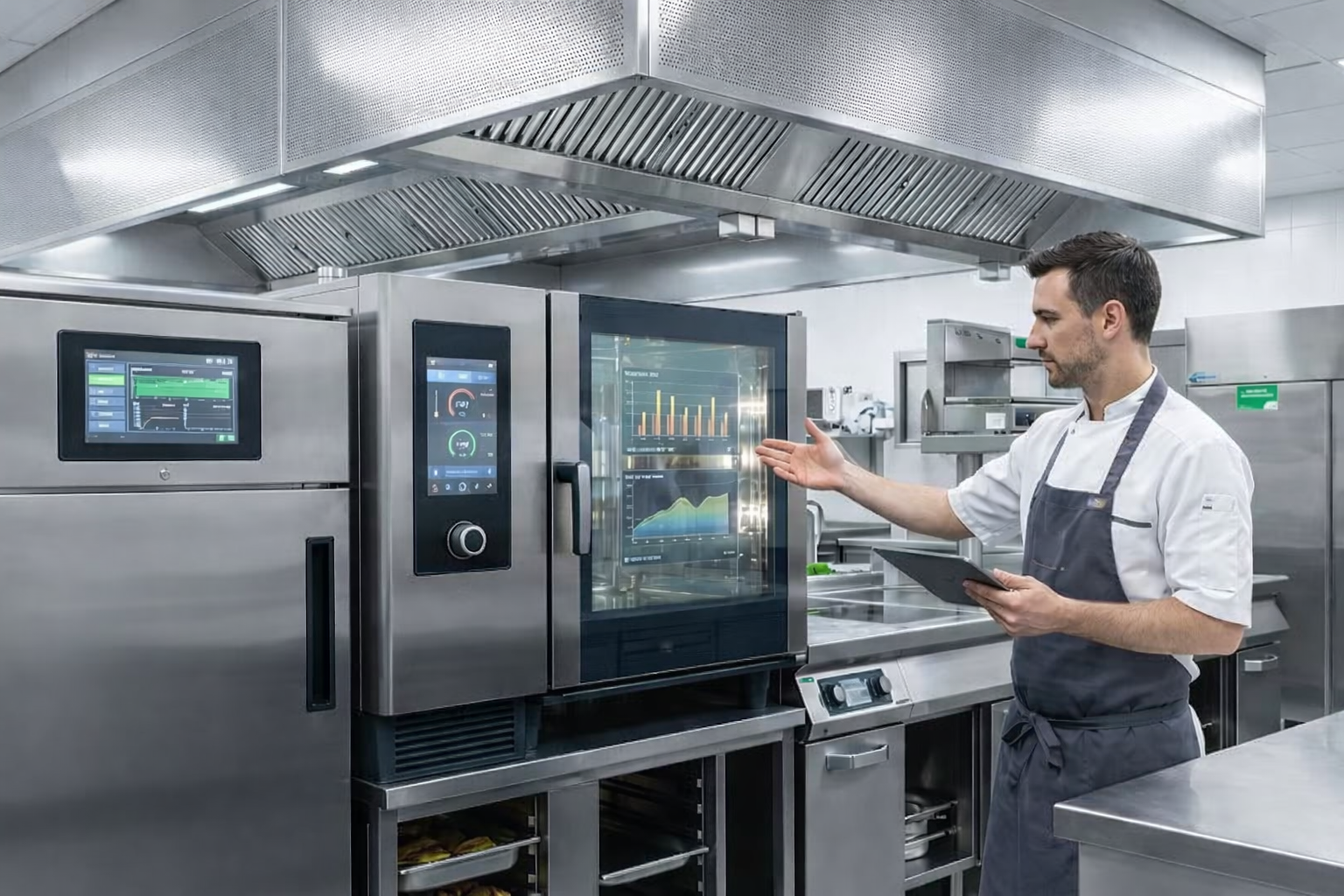

Technology is reshaping every corner of Canada’s foodservice industry, and the commercial kitchen sits at the centre of that transformation. Rising energy costs, tightening food-safety expectations, labour shortages, and growing demand for speed and consistency are pushing operators to rethink how their kitchens are designed and equipped.
By 2026, successful restaurants will rely on more intelligent, efficient, and adaptable systems. While some advanced technologies are still emerging across the industry, the decisions operators make today around smart commercial kitchen equipment will determine how well their kitchens adapt to future demands.
This guide explores the key trends shaping future restaurant equipment in Canada, how smart technology is influencing kitchen operations, and what operators can do now to prepare for a more efficient, sustainable, and data-driven future.
Why Canadian Restaurants Must Prepare for Smarter Kitchens
Restaurant operators across Canada are navigating a challenging operating environment:
- Energy costs continue to rise, increasing pressure to reduce consumption.
- Labour shortages persist, making ease-of-use and consistency critical.
- Food safety standards are tightening, with greater emphasis on documentation and control.
- Consumers expect faster service, consistent quality, and transparent operations.
Industry data consistently shows that commercial kitchens can consume up to five times more energy per square foot than other commercial buildings. In many operations, kitchen equipment represents the single largest source of energy usage.
As a result, restaurant technology is no longer just about convenience. It is becoming a core business strategy. Kitchens designed with future innovation in mind are better positioned to control costs, improve workflow, and remain competitive as expectations continue to evolve.
Smart Kitchen Technology: Where the Industry Is Heading
Commercial kitchen innovation in Canada is increasingly shaped by automation, connectivity, and data-driven decision-making. While full connectivity is still developing across the market, the direction is clear: kitchens are becoming more intelligent, responsive, and efficient.
Connected Refrigeration & Temperature Monitoring
Temperature control remains one of the most critical areas for food safety and energy efficiency. Emerging smart refrigeration technologies are designed to improve reliability and documentation by offering:
- Continuous temperature monitoring
- Automated alerts for temperature deviations
- Adaptive cooling cycles based on usage patterns
- Improved compressor efficiency to reduce energy demand
As regulatory scrutiny increases, connected monitoring is expected to play a larger role in food-safety compliance across Canadian commercial kitchens.
Automated & Programmable Cooking Equipment
Automation is becoming a powerful response to labour challenges. Modern cooking equipment is increasingly built with advanced controls that support:
- Multi-stage programmable cooking
- Automatic standby and shutoff modes
- Consistent results across shifts and staff skill levels
- Reduced training time for new employees
While fully sensor-driven systems are still emerging, today’s programmable equipment already lays the foundation for smarter, more standardized kitchen operations.
Predictive Maintenance: A Defining Trend for 2026
One of the most impactful innovations shaping future restaurant equipment in Canada is predictive maintenance. As equipment becomes more digitally enabled, it will increasingly be able to identify performance issues before failures occur.
The long-term benefits include reduced downtime, fewer emergency repairs, extended equipment lifespan, and improved budgeting for maintenance. While adoption is still developing, predictive insights are expected to become a standard feature of commercial kitchen operations by 2026.
Energy Efficiency and Sustainability Are Becoming Non-Negotiable
Sustainability is no longer optional in Canadian foodservice. Consumer expectations, utility incentives, and government efficiency initiatives are accelerating the shift toward lower-impact kitchen operations.
High-Efficiency Cooking Equipment
Advances in insulation, burner design, airflow control, and heat retention are dramatically improving the performance of modern cooking equipment. These improvements allow appliances to:
- Reach temperature faster
- Maintain consistent heat with less energy
- Reduce ambient kitchen heat
- Lower overall utility costs
Energy-efficient equipment also contributes to a more comfortable working environment, which plays an important role in staff retention.
Smarter Ventilation & Hood Systems
Ventilation remains one of the largest energy consumers in commercial kitchens. Demand-controlled ventilation systems are increasingly being adopted to respond dynamically to cooking activity.
By adjusting fan speeds in real time and recovering excess heat, modern ventilation systems reduce energy waste while maintaining safety and air quality, particularly in high-volume operations.
Water and Waste Reduction Technologies
Dishwashing and sanitation systems are also evolving. Emerging innovations focus on:
- Optimized rinse cycles
- Reduced water and detergent usage
- Heat recovery for faster, more efficient drying
- Load-sensing technology to prevent overuse
These technologies support sustainability goals while delivering meaningful long-term savings.
Meeting Changing Consumer Expectations
Canadian diners are becoming more discerning about how restaurants operate. Speed, consistency, cleanliness, and sustainability all influence purchasing decisions.
Smart and modern kitchen equipment directly supports these expectations by improving operational control and transparency.
Speed and Consistency
High-speed ovens, programmable equipment, and streamlined workflows help restaurants deliver faster service with consistent quality—especially during peak periods and staff shortages.
Food Safety Confidence
Automated monitoring and digital controls reduce manual error, improve documentation, and help kitchens demonstrate compliance with food safety standards.
Menu Flexibility and Innovation
Versatile equipment allows operators to expand menus, test seasonal offerings, and respond quickly to changing consumer trends without adding unnecessary complexity or footprint.
What Restaurants Can Do Now vs. What’s Still Emerging
Not every future technology requires immediate adoption. Smart planning means knowing what to invest in now and what to prepare for later.
Invest now:
- Energy-efficient cooking and refrigeration
- Programmable equipment for consistency
- Demand-controlled ventilation
- Equipment with digital readiness
Prepare for next:
- Fully predictive maintenance systems
- Deeper equipment-to-platform connectivity
- Advanced analytics and AI-driven optimisation
This phased approach allows operators to improve performance today while staying ready for tomorrow.
Celco: Supporting Modern, Future-Ready Commercial Kitchens
As foodservice operations evolve, restaurants need equipment that performs reliably today while aligning with the future of kitchen innovation.
Celco is among the established foodservice technology suppliers in Canada, supporting commercial operators with durable, modern solutions designed for performance, efficiency, and longevity. While fully connected and predictive technologies continue to develop across the industry, today’s equipment choices play a critical role in preparing kitchens for what’s next.
By investing in high-quality cooking, refrigeration, and support systems now, operators can build kitchens that are adaptable, efficient, and ready to integrate emerging technologies as they become more widely available.
The Future of Restaurant Kitchens in Canada
The kitchens that succeed in 2026 and beyond will be smart by design, efficient by default, and guided by data-driven decision-making. Preparing for that future starts with understanding where commercial kitchen innovation in Canada is heading—and choosing equipment that supports long-term growth.
Future-ready kitchens help operators control costs, improve consistency, reduce training demands, and meet rising expectations around sustainability and safety. With the right planning and partners, restaurants can build kitchens that are not only efficient today but ready for the next generation of foodservice technology.
Planning an equipment upgrade or new kitchen build?A conversation with an experienced Canadian foodservice equipment specialist can help you identify which technologies make sense now and how to prepare for what’s next.
Contact Celco today to explore the best smart commercial kitchen equipment that Canada has to offer and build a kitchen designed for the future.