

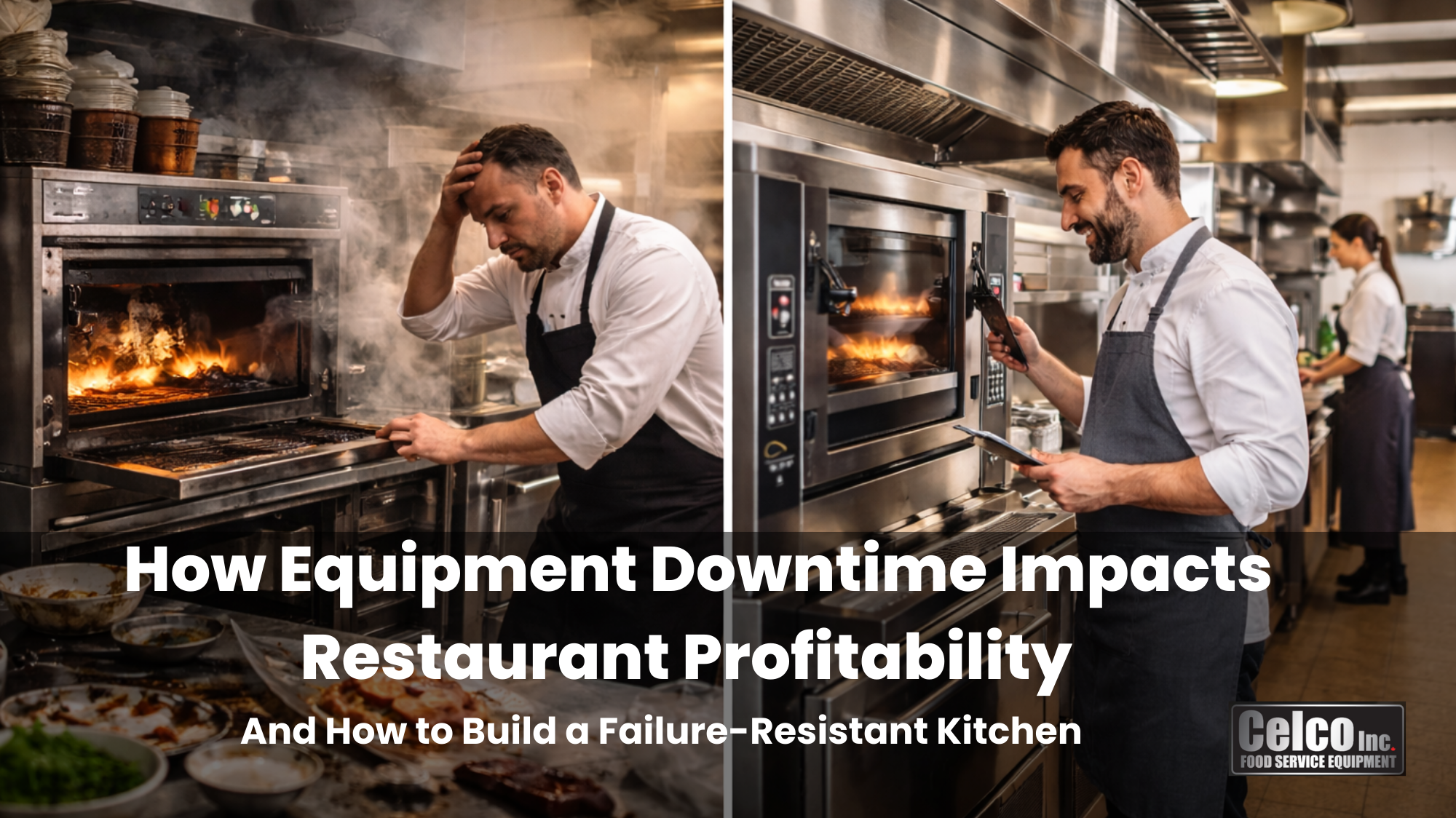

A malfunctioning oven during dinner service or a failed walk-in cooler overnight isn’t just an operational headache; it’s a direct, significant drain on your restaurant’s profits. Commercial kitchen equipment downtime can cost a single location between $2,000 and $5,000 in immediate lost sales and spoiled inventory, eroding up to 11% of annual revenue.
This stark reality makes equipment reliability your most critical, yet often overlooked, profit center. The solution is a strategic shift from reactive fixes to building a failure-resistant kitchen that protects your revenue, reputation, and peace of mind.
The Direct Profit Drain: Quantifying Downtime’s True Cost
To understand the urgency, you must account for all the hidden costs beyond the service interruption:
- Lost Revenue & Customer Trust: A broken key appliance during peak hours means turning customers away, resulting in immediate lost revenue and frustrated customers who may not return.
- Inventory Catastrophe: A refrigeration unit failure can spoil $3,000 to $8,000 in high-cost proteins, dairy, and prepped ingredients in hours, a pure loss that hits your bottom line.
- Crisis-Level Labor Costs: Equipment failures force staff to resort to inefficient manual workarounds, slowing service and inflating labor costs during the most stressful moments.
- Premium Emergency Repairs: Costly emergency repairs incur after-hours premiums, while rushed replacements for major components are always more expensive.
Together, these factors make commercial kitchen equipment downtime one of the most expensive—and preventable—operational risks in foodservice.
1. Invest in Durability & Intelligent Design from the Start
Your kitchen’s design and original equipment choices are the foundation of reliability.
- Select for Long-Term Performance: Choose reliable equipment from manufacturers known for durability and accessible professional service. This significant upfront investment secures lower repair costs, extended equipment lifespan, and better energy efficiency, thereby reducing utility bills.
- Design for Smooth Operations: Implement a linear workflow (storage → prep → cooking → plating) to minimize chaotic movement and wear and tear. Task lighting and a Kitchen Display System (KDS) reduce errors and keep tickets moving, ensuring smoother operations during rush periods.
Strong design decisions directly support commercial kitchen reliability.
2. Implement a Proactive Maintenance Strategy (Your Profit Shield)
Preventive maintenance is not an expense; it’s your most powerful profit-protection tool. A formal scheduled maintenance program delivers measurable ROI:
- Slash Repair Costs: Regular maintenance catches early signs of mechanical wear, preventing major failures. This proactive approach can reduce repair costs by up to 50% compared to a reactive model.
- Ensure Safety & Consistency: It ensures food safety by guaranteeing that refrigeration equipment maintains precise temperatures and that cooking equipment delivers consistent food quality. Well-maintained kitchen equipment also operates at peak efficiency, using less energy.
- Avoid Compliance Violations: Properly maintained equipment is far less likely to cause health code violations related to temperature control or sanitation.
This regimen must include daily cleaning, weekly deep cleaning of critical components, and quarterly professional service by certified technicians.
3. Build Redundancy and Secure Reliable Service Support
Failure-resistant kitchens are not built on hope. They are built on smart equipment planning and dependable service infrastructure.
Plan for Operational Redundancy
Where possible, avoid single points of failure. Two smaller fryers instead of one oversized unit. Split refrigeration zones rather than one overloaded walk-in. Strategic redundancy protects production capacity if one unit goes down, keeping service running and revenue protected.
Standardize Equipment Across Locations
Using consistent models across multiple sites simplifies training, reduces parts variability, and speeds up repairs. Technicians can diagnose issues faster, and replacement parts are easier to source.
Partner With Experienced Service Providers
Strong foodservice equipment service support reduces downtime dramatically. Our established service partners ensure quicker response times, correct parts availability, and technicians who understand your equipment configuration. This prevents repeat breakdowns and short-term fixes that fail again under pressure.
Train Staff to Protect Equipment
Many failures stem from misuse, improper cleaning, or overlooked warning signs. Cross-training kitchen staff on correct startup, shutdown, cleaning, and reporting procedures prevents minor issues from escalating into operational shutdowns.
Reliability Is a Revenue Protection Strategy
In today’s restaurant environment, equipment reliability directly protects profitability. Investing in durable equipment, enforcing preventive maintenance, and aligning with dependable service partners significantly reduces restaurant equipment failure costs and unplanned downtime.
Restaurants that treat reliability as a strategic priority operate more consistently, pass inspections more easily, and retain customer trust during peak demand.
Planning for reliability requires experienced guidance. Equipment and service specialists such as Celco and Celcook help operators design kitchens for durability, implement maintenance programs, and secure long-term commercial kitchen reliability.
Before the next breakdown occurs, a focused review of your equipment condition and maintenance strategy can prevent costly disruptions and protect your margins.