

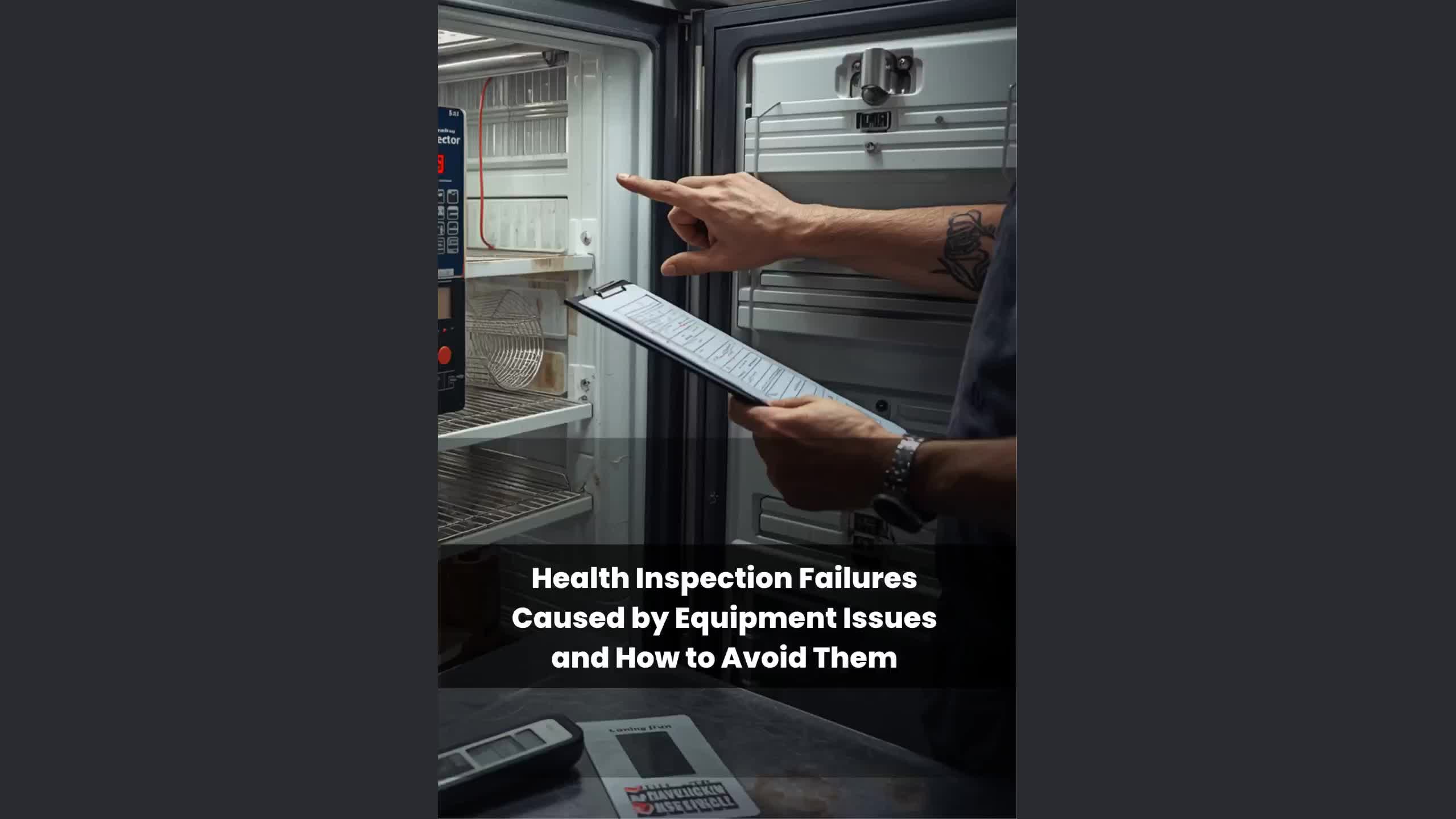

Health inspection failures in Canadian restaurants are often traced back to equipment issues. While many operators focus on food-handling procedures, inspectors consistently identify refrigeration failures, sanitation lapses, and poorly maintained prep surfaces as the primary contributors to critical violations.
Equipment problems rarely appear suddenly. They develop gradually over time due to wear, inconsistent maintenance, or overlooked warning signs. By the time an inspector documents the issue, the breakdown has usually been forming for weeks or months.
Understanding how equipment failures lead to violations and how inspectors evaluate your kitchen allows you to prevent problems long before inspection day.
Common Health Inspection Violations Linked to Equipment
Across Canadian jurisdictions, inspectors frequently cite equipment-related violations tied to temperature control, sanitation, and surface integrity. Refrigeration failures are among the most serious findings. Cold food must be stored at 4°C or below, and freezers must maintain -18°C. When units cannot consistently hold these temperatures, food enters the danger zone, increasing the risk of bacterial growth. Violations often stem from failing compressors, worn door gaskets, blocked airflow, or inaccurate thermometers.
Dishwashing equipment is another frequent source of non-compliance. High-temperature dishwashers must achieve a final rinse of 82°C, while chemical sanitizing systems must maintain proper concentrations verified with test strips. When heating elements weaken or chemical feed systems malfunction, dishes may appear clean but remain unsanitized.
Cooking equipment can also trigger violations when thermostats are uncalibrated or when heating is uneven. If hot-holding units fail to maintain 60°C or above, inspectors may cite temperature abuse concerns. Food-contact surfaces pose an additional risk. Cutting boards with deep grooves, rusted stainless steel tables, or chipped plastics cannot be fully sanitized. Once surfaces become damaged, cleaning alone is no longer sufficient.
Ventilation systems are frequently cited when grease accumulation exceeds acceptable levels. Excess buildup restricts airflow, creates contamination risks, and signals poor maintenance discipline. Each of these violations reflects a breakdown in control over temperature, sanitation, or cleanability, the core pillars of food safety compliance.
Equipment-Related Red Flags Inspectors Look For
Beyond obvious violations, inspectors look for patterns that indicate whether an operation proactively maintains equipment.
Temperature control units receive immediate attention. Inspectors assess not only current readings but also door seal integrity, frost buildup, condenser coil cleanliness, and the completeness of temperature logs. A unit barely maintaining compliance while showing signs of strain suggests future failure.
Physical condition matters. Rust on equipment legs, corrosion around sinks, pooling water beneath machines, or cracked floor tiles near prep areas indicate maintenance gaps. These conditions may not always be violations themselves, but they prompt deeper scrutiny.
Inspectors also notice missing parts, delayed repairs, or equipment stored out of service. These signal reactive rather than preventive maintenance practices. Sanitization systems are tested directly. Inspectors verify dishwasher rinse temperatures and sanitizer concentrations. Empty sanitizer buckets, missing test strips, or incomplete logs raise concerns about the consistency of monitoring.
Pest risks are closely tied to equipment condition. Grease buildup, leaky plumbing, and gaps around pipes create harborage points. Inspectors recognize that pest activity often originates in neglected equipment areas. Experienced inspectors evaluate the overall condition of your equipment as evidence of operational discipline. Visible neglect in one area often leads them to examine others more carefully.
How Poor Equipment Maintenance Causes Failures
Equipment violations rarely occur without warning. They are typically the result of small issues left unaddressed.
Refrigeration units gradually lose efficiency as condenser coils accumulate debris. Compressors run longer, internal temperatures fluctuate, and eventually the unit cannot maintain safe storage levels. By the time staff notice the problem, food may already be compromised.
Dishwashers experience similar patterns. Spray arms clog slowly, reducing water pressure and coverage. Heating elements weaken over time, resulting in rinse temperatures below required thresholds. Without regular testing and servicing, these deficiencies go undetected until an inspection reveals them.
Food contact surfaces deteriorate with repeated use. Knife grooves deepen, surfaces pit, and materials degrade. Once surfaces can no longer be fully sanitized, replacement becomes necessary, not optional.
Documentation failures compound mechanical issues. Inspectors rely on temperature logs, service records, and sanitization checks to confirm ongoing compliance. When these records are incomplete or inconsistent, even functioning equipment appears unreliable. Inspections do not fail restaurants because of a single bad day. They fail when maintenance systems lack consistency.
Equipment Upgrades That Reduce Inspection Risk
While routine maintenance is essential, strategic equipment upgrades can strengthen compliance controls. Modern refrigeration systems with digital monitoring and alarm alerts reduce the risk of unnoticed temperature drift. Automated logging features provide verifiable records for inspectors and eliminate documentation gaps.
NSF-certified equipment is designed with food safety in mind. Smooth, seamless surfaces and corrosion-resistant materials improve cleanability and durability. These design standards reduce contamination risk over time. High-efficiency dishwashers with built-in temperature displays and chemical dispensers minimize human error and ensure consistent sanitization performance.
In some cases, the most effective upgrade is simply replacing worn food contact surfaces. New cutting boards, prep tables, and shelving eliminate contamination risks that cleaning alone cannot resolve. Upgrades should not be cosmetic. They should enhance control over temperature, sanitation, and maintenance verification.
Pre-Inspection Equipment Checklist for Canadian Restaurants
A structured internal review helps identify risks before inspectors do. The following checklist focuses on the equipment categories most commonly cited.
| Equipment Category | Key Inspection Points | Frequency |
| Refrigeration | ≤4°C coolers, ≤-18°C freezers; door seals intact; thermometers accurate; logs current | Daily checks; weekly review |
| Cooking Equipment | Calibrated thermostats; hot-holding ≥60°C; grease controlled; burners functioning | Weekly |
| Dishwashing | Final rinse 82°C (high-temp); sanitizer concentration verified; spray arms clear | Daily |
| Food Contact Surfaces | No deep grooves, rust, or pitting; replace damaged items promptly | Weekly |
| Ventilation | Grease buildup within limits; filters clean; professional duct servicing scheduled | Monthly visual; quarterly professional |
| Documentation | Temperature logs complete; service records accessible; sanitizer checks recorded | Ongoing |
Consistent adherence to these controls significantly reduces the likelihood of equipment-related violations.
Conclusion
Equipment-related health inspection failures in Canadian restaurants are largely preventable. Most violations stem from predictable maintenance gaps, worn components, or inconsistent monitoring rather than sudden breakdowns.
Operators who treat equipment management as a structured system, supported by daily checks, routine servicing, and clear documentation, consistently reduce inspection risk. The difference between passing and failing is rarely the inspection itself; it is the condition of your equipment long before the inspector arrives.
If you need professional support with commercial kitchen equipment maintenance or compliance readiness in Canada, contact Celco. Our team helps restaurants stay inspection-ready, reduce operational risk, and maintain consistent food safety standards.