

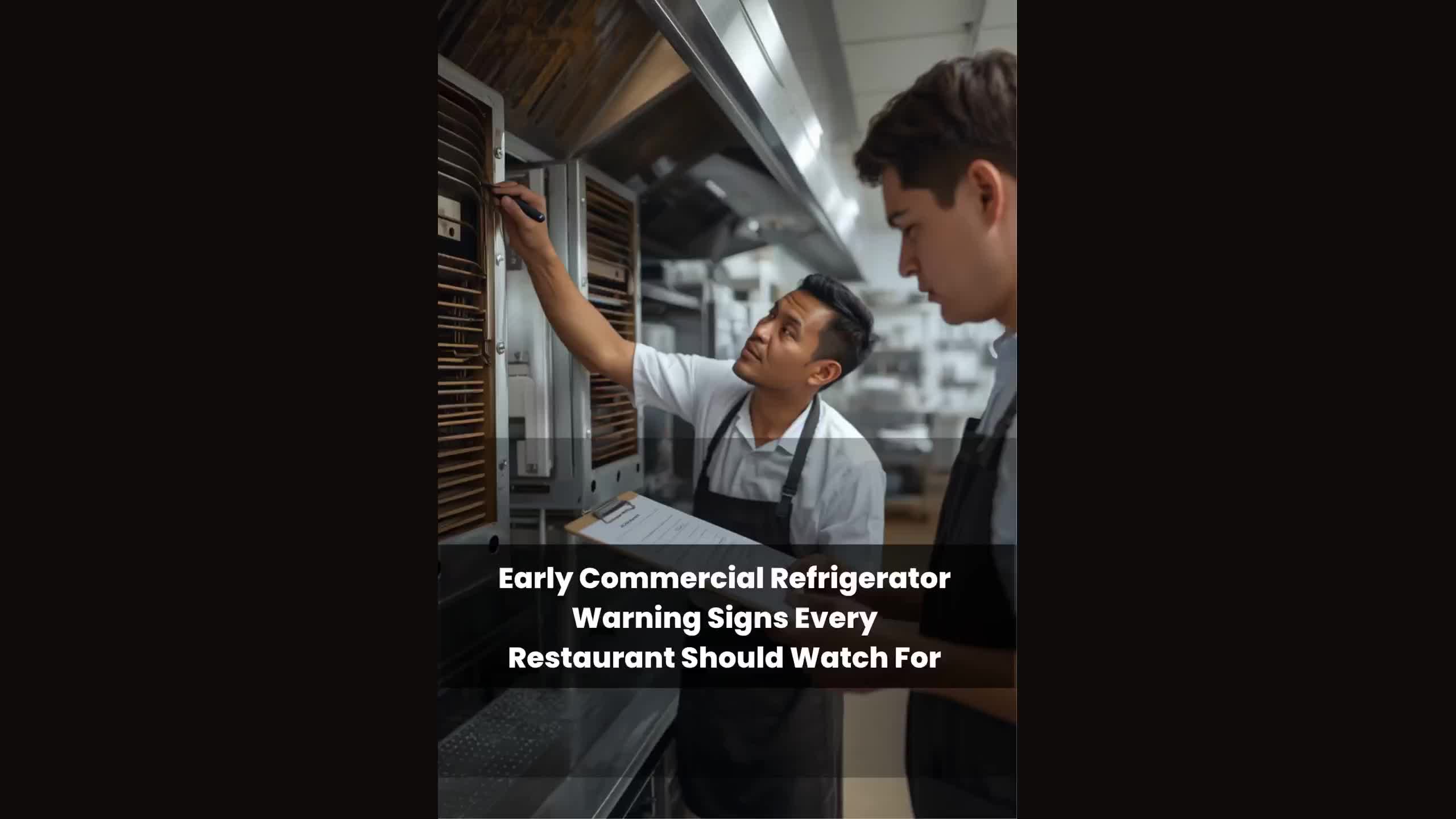

Commercial refrigeration is the backbone of any restaurant kitchen. When it fails, the damage is immediate: spoiled inventory, lost revenue, emergency service calls, and potential health code violations.
Most commercial fridge failures do not happen suddenly. Performance declines gradually, with warning signs appearing weeks or even months in advance. Recognizing these signals early can prevent catastrophic breakdowns and expensive downtime.
If your commercial refrigerator is struggling, understanding what to look for — and when to act — can protect your operation.
Why Refrigeration Failures Are So Costly
A failing commercial refrigerator impacts more than temperature control.
First, there is inventory loss. Perishable ingredients stored above 4°C enter the danger zone quickly. Even brief temperature excursions can compromise food safety and require the product to be discarded.
Second, downtime disrupts service. A walk-in cooler or prep fridge breakdown during peak hours can halt production and delay customers.
Third, emergency repairs cost significantly more than scheduled maintenance. After-hours service calls and expedited parts lead to higher repair expenses.
Finally, repeated refrigeration problems may draw scrutiny during health inspections. Temperature logs that show fluctuation or units struggling to maintain cooling can result in compliance issues.
The true cost of refrigeration failure is not just repair — it is operational disruption.
5 Early Commercial Refrigerator Warning Signs You Should Never Ignore
Most commercial refrigeration problems begin with subtle performance changes. Recognizing these early warning signs allows you to intervene before a full breakdown occurs.
1. Inconsistent Internal Temperatures
If temperatures fluctuate throughout the day or struggle to remain at 4°C (40°F) or below, your unit may be losing cooling efficiency.
Safe food storage requires refrigeration temperatures between 0–4°C (32–40°F). When a restaurant refrigerator is not cooling properly, the risk of bacterial growth increases and stored food may become unsafe.
2. Excessive Compressor Cycling
Compressors should cycle on and off at predictable intervals. If your unit runs continuously or cycles unusually frequently, it may be compensating for airflow issues, dirty condenser coils, or refrigerant problems.
Continuous operation accelerates wear and increases energy consumption.
3. Frost or Ice Buildup
Ice accumulation inside the unit or along evaporator coils often signals airflow restriction or failing defrost systems. Frost reduces cooling efficiency and forces the compressor to work harder.
Left unaddressed, ice buildup can lead to a complete system shutdown.
4. Unusual Noises
Grinding, rattling, or buzzing sounds may indicate fan motor failure, compressor stress, or loose components. Refrigeration systems should operate with consistent, low-level sound.
New or irregular noises should never be ignored.
5. Rising Energy Bills
A sudden increase in electricity consumption without changes in operating hours often signals declining refrigeration efficiency.
As refrigeration systems age, compressors and fans must run longer to maintain temperature, which increases utility costs and often indicates a commercial fridge failing internally.
What Causes Commercial Refrigerator Performance Decline?
Understanding the root causes of refrigeration failure helps determine whether repair or replacement is the appropriate next step.
Dirty condenser coils are among the most common contributors. When coils are coated in grease or dust, heat cannot dissipate efficiently. The compressor must work harder, shortening its lifespan.
Worn door gaskets allow cold air to escape and warm air to enter. This forces the system to compensate continuously.
Low refrigerant levels reduce cooling capacity and place stress on internal components. Refrigerant leaks may develop gradually, making performance decline appear subtle at first.
Fan motor wear, blocked airflow from overstocking, and failing thermostats also contribute to uneven cooling.
In many cases, performance decline is cumulative. Small issues combine until the system can no longer maintain safe temperatures.
When to Repair vs. Replace a Commercial Refrigerator
One of the most common questions restaurant operators face is whether to repair a failing commercial fridge or replace it entirely.
Repair may be appropriate when:
- The unit is relatively new.
- The issue involves isolated components such as a thermostat, fan motor, or gasket.
- Repair costs are significantly lower than replacement costs.
Replacement should be considered when:
- The compressor has failed.
- The unit is approaching or exceeding expected lifespan.
- Repair costs approach 50% of replacement value.
- The system struggles to maintain temperature even after previous repairs.
Older units often experience recurring breakdowns. While individual repairs may seem affordable, repeated service calls quickly exceed the cost of investing in new equipment.
If your restaurant refrigerator is not cooling properly and requires frequent repairs, it may be more cost-effective to upgrade before catastrophic failure occurs.
How to Prevent Unexpected Commercial Refrigerator Breakdowns
Preventive maintenance is the most effective way to reduce refrigeration failure risk.
Regular condenser coil cleaning improves heat transfer and reduces compressor strain. Door gaskets should be inspected routinely for cracks or hardening. Thermometers must be calibrated and monitored consistently.
Avoid overloading shelves, as restricted airflow reduces efficiency. Ensure ventilation space around the unit remains unobstructed.
Scheduled professional inspections can identify refrigerant leaks, electrical issues, and early mechanical wear before major damage occurs.
Most refrigeration breakdowns are preventable when maintenance is treated as a priority rather than an afterthought.
Don’t Ignore the Warning Signs of a Commercial Fridge Failing
Commercial refrigerator failures rarely occur without warning. In most cases, early commercial refrigerator warning signs, such as temperature fluctuations, compressor strain, unusual noises, or rising energy usage, appear long before a complete breakdown.
Recognizing when a commercial fridge is failing allows restaurant operators to address small issues before they become costly emergencies. Whether the solution involves preventative maintenance, targeted repair, or evaluating commercial fridge repair vs replacement, acting early protects your inventory, food safety compliance, and operational efficiency.
If your restaurant refrigerator is not cooling properly or showing signs of performance decline, Celco can help evaluate your equipment and recommend the best next step.
Schedule a professional refrigeration inspection today to prevent costly downtime and keep your kitchen running safely.