
Stop viewing your beverage station as just a utility space. In the Canadian foodservice market, drinks are the fastest-moving, highest-profit items on your menu.
For café and quick-service restaurant (QSR) owners, the real challenge isn’t just the morning coffee rush—it’s managing the surge of espresso orders, iced lattes, and fountain drinks all at once without slowing down service. A mismatched lineup of your beverage equipment can result in long queues, inconsistent quality, and lost revenue.
This guide outlines the precise equipment categories and features you need to invest in to build a beverage program that is fast, reliable, and designed for maximum profit.
The Profit Landscape: Meeting the Demand for Variety
The modern Canadian beverage consumer demands a complex mix of speed, specialty, and cold refreshment. Your equipment must be versatile enough to support four distinct high-volume areas:
| Trend | Operational Requirement | Equipment Focus |
| Iced & Cold Brew Boom | High-capacity chilling and reliable ice infrastructure. | Ice Machines, Cold Storage |
| Ready-to-Go (RTG) Drinks | Attractive, reliable, and energy-efficient merchandising. | Refrigerated Display Coolers, High-Volume Dispensers |
| Frozen & Whipped Beverages | Controlled freezing/whipping for consistent texture and temperature. | Commercial Freezers, Whipped Cream Dispensers |
High-Volume Production: The Dispensers
Beverage dispensers are the primary tool for reducing labour costs and maximizing throughput. The quality of your commercial beverage dispensers is directly linked to customer satisfaction, as no one tolerates slow fountain service.
Post-Mix Soda Systems (Fountain Drinks)
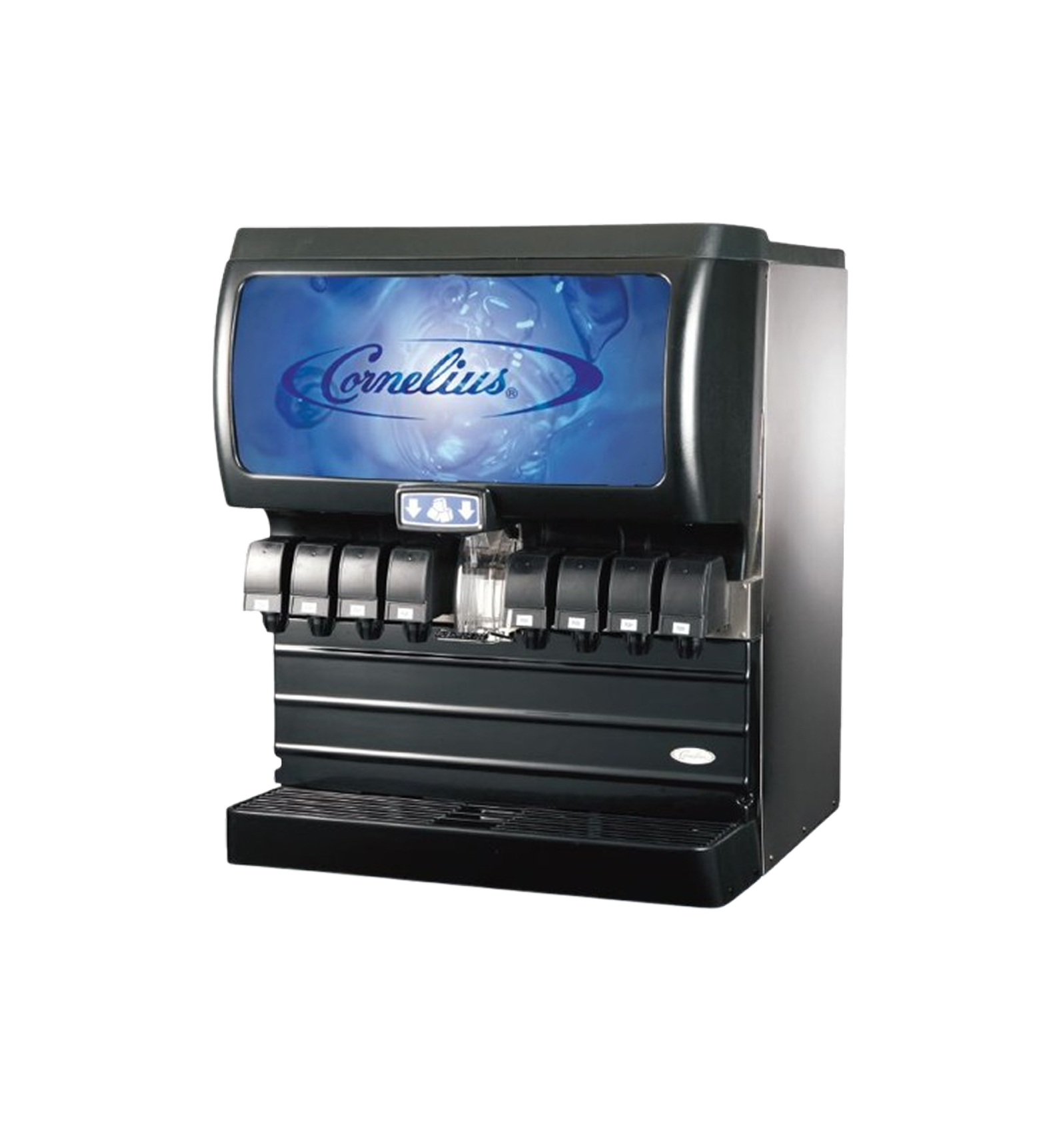
For QSRs with consistent soft drink traffic, post-mix dispensers (like those from Cornelius that Celco supplies) are essential. Focus on two critical features:
- Flow Rate: High-flow valves ensure the machine maintains its pace during a sustained lunch rush. Investing in a multi-head unit minimizes bottlenecks when multiple customers are filling drinks.
- Reliable Cooling: The unit must use advanced ice bank or coil technology to chill the product rapidly and maintain optimal temperature, guaranteeing a cold drink regardless of the ambient temperature of your kitchen.
Juice, Iced Tea, and Specialty Dispensers
For cafés or operations with high demand for premium cold drinks, look for dedicated multi-bowl dispensers. They offer better control over specialty bases (lemonade, iced tea, specialty juice) and act as powerful merchandising tools. Choose units that prioritize:
- Visual Merchandising: Clear, appealing bowls positioned at the front-of-house drive impulse buys.
- Ease of Cleaning (NSF Compliance): Dispensers are notorious for sticky buildup. Look for models with simple, tool-free disassembly for daily sanitation.
The Critical Cold Chain: Ice and Chilling
Ice is often the overlooked utility that fails first in a high-volume QSR or café, particularly in the summer. Investing in reliable commercial ice machines is non-negotiable for sustained profitability.
Capacity and Cube Shape
Your ice machine must exceed your maximum daily volume plus a safety buffer. Celco provides high-performance machines from brands like Ice-O-Matic. When choosing, consider:
- Volume: Calculate based on 5 lbs per customer seat or 1 lb per meal, plus your specific needs for specialty drinks and smoothies.
- Cube Type: Choose the cube that suits your menu. Full cubes are best for high-displacement (soda), while softer nugget or flaked ice is better for blending and chewability.
Specialized Cold Storage
To support peak beverage production, undercounter refrigeration units are mandatory.
- Undercounter Refrigeration: Units from the Celcold Refrigeration line, for instance, are designed to fit directly beneath the beverage station. They keep high-use, temperature-sensitive ingredients (milk, cream, specialty syrups) cold and immediately accessible to staff, dramatically speeding up drink assembly.
- Back Bar Refrigeration: If your QSR or café sells bottled beverages, dedicated glass-door back bar coolers are essential merchandising tools that optimize visibility and organization.
High-Profit Center: Specialty Equipment
Smoothies, frozen coffees, and proprietary specialty drinks carry your highest profit margins, but they require powerful, specialized coffee shop equipment to ensure speed and consistency.
High-Profit Frozen Beverage Dispensers
Specialty frozen drinks, from iced cappuccinos to granitas and frozen lemonades, are high-margin items that require controlled freezing. Dedicated frozen beverage dispensers provide the speed and consistency needed to handle high summer volume. Look for:
- Consistency Control: Units with variable freeze settings and robust auger systems maintain the perfect slush or soft-frozen texture, eliminating the time-consuming process of blending individual drinks.
- Multi-Flavour Capacity: Multi-bowl dispensers let you run multiple high-profit flavours simultaneously, boosting variety and impulse purchases in your quick-service restaurant equipment setup in Canada.
Operational Excellence: Choosing Based on ROI
When making your final decision on which beverage equipment works best for you, prioritize features that deliver measurable returns on investment:
| Feature | Financial ROI | Operational Efficiency |
| ENERGY STAR Rating | Reduces water and energy utility costs over the equipment lifespan. | Lower heat output into the kitchen, reducing HVAC load. |
| Modular Design | Maximizes profit from small footprints. | Allows for quick re-arrangement of the beverage station flow. |
| High Durability | Minimizes repair costs and eliminates costly service downtime during peak hours. | Guarantees reliability when you need it most (e.g., during summer ice demand). |
Partner with Celco for Beverage Success
The choice of quick-service restaurant equipment in Canada directly dictates your capacity for profit. By focusing on reliability, capacity, and specialized functionality in your beverage station, you ensure consistent quality and rapid service year-round.
Celco is one of the leading foodservice equipment suppliers in Canada that provides the trusted, commercial-grade infrastructure your business needs. From Ice-O-Matic to Cornelius and our own Celcold refrigeration, our inventory is curated for high-volume success.
Ready to Maximize Your Beverage Throughput and Profitability?
Contact Celco today to consult with our specialists and view our full selection of Beverage Equipment designed for your volume and success.