

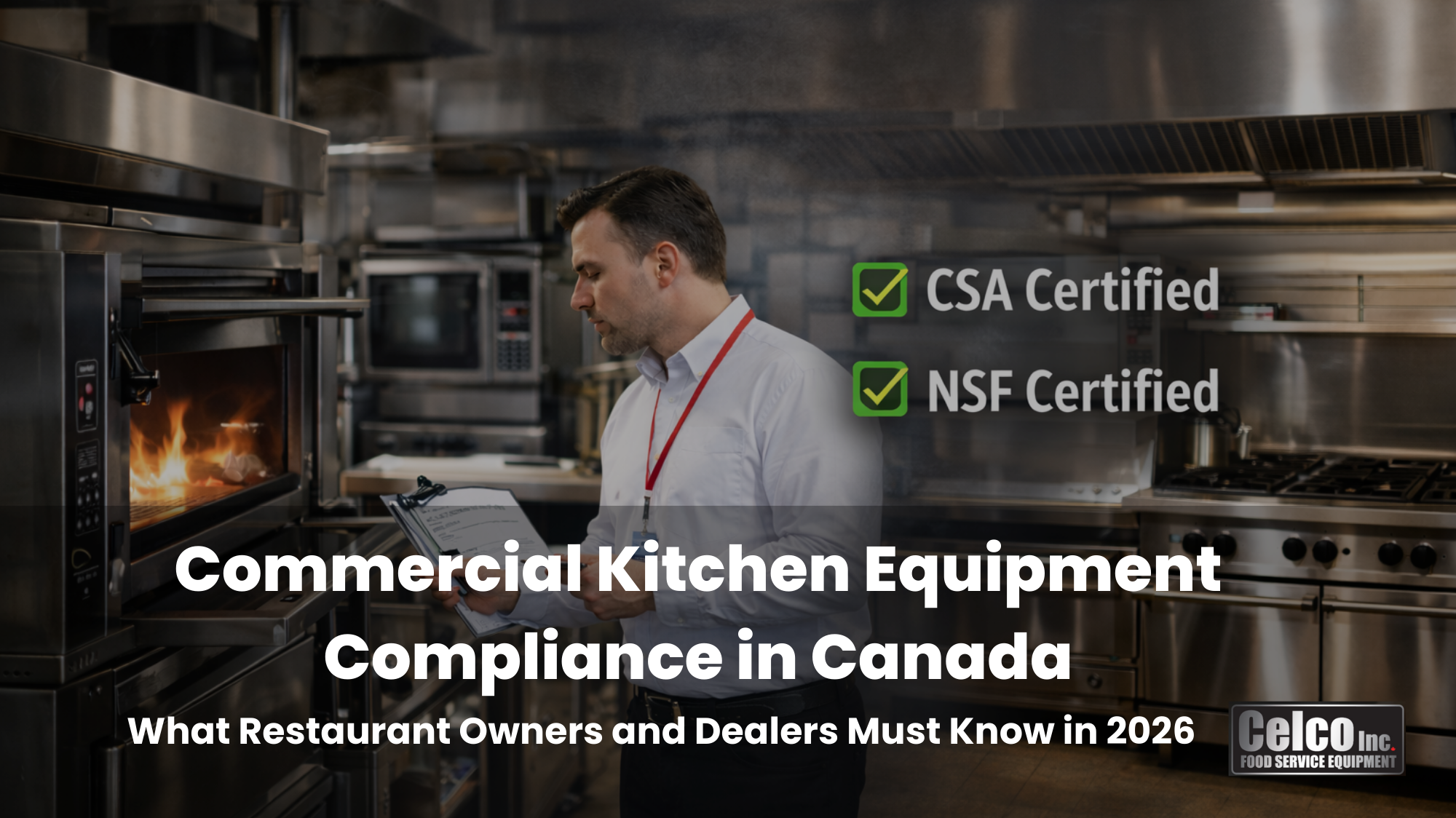

For restaurant owners, equipment dealers, and foodservice operators across Canada, commercial kitchen equipment compliance is no longer a secondary consideration. It is a core operational responsibility. Federal regulations, provincial health standards, and rigorous inspection protocols require careful attention to how equipment is selected, installed, and maintained.
Understanding restaurant equipment regulations in Canada goes far beyond avoiding fines or failed inspections. Compliance directly influences food safety outcomes, inspection ratings, insurance exposure, and the long-term stability of your operation. In an industry where reputations are built over decades and can be damaged quickly, regulatory discipline protects both performance and profitability.
This guide breaks down the core regulatory framework, required certifications, and practical operational steps restaurant owners and dealers must understand to remain compliant in 2026 and beyond.
The Regulatory Foundation: SFCR, CFIA, and Licensing
The cornerstone of national compliance is the Safe Food for Canadians Regulations (SFCR). This framework governs businesses that prepare, store, or transport food for interprovincial trade or export.
A crucial point for growing chains and food processors is that licensing requirements are based on activity, not business type. If your operation manufactures, processes, or packages food crossing provincial lines, a licence from the Canadian Food Inspection Agency (CFIA) is mandatory.
For all food premises, including restaurants that sell food for human consumption within a province, local public health regulations take precedence. These are enforced by regional inspectors who will assess your commercial kitchen equipment as a core component of food safety.
Key universal requirements include:
- Equipment must be of suitable construction, corrosion-resistant, non-toxic, and non-absorbent.
- Food contact surfaces must be smooth, seamless, and easy to clean to eliminate potential breeding grounds for pathogens.
- A reliable potable water supply and adequately supplied handwashing stations are non-negotiable.
- Temperature control for refrigeration and cooking is paramount to keep meat products, dairy, eggs, and prepared vegetables out of the bacterial “danger zone.”
Equipment Standards: Decoding Certifications for Safety and Efficiency
Beyond general construction rules, specific certifications are your benchmark for compliant commercial food equipment. In Canada, the most recognized marks are:
- NSF/ANSI Standards: NSF certification is the gold standard for hygiene and food safety. It verifies that equipment is designed for commercial use, with materials and construction that prevent contamination and are easy to clean. For health inspectors, NSF marks on prep tables, sinks, and cooking equipment signal due diligence.
- CSA Group Certification: This indicates that an appliance meets strict Canadian electrical and gas safety standards. CSA-certified commercial kitchen equipment ensures protection against electrical overloads and incorporates essential fire safety features like flame failure devices on gas ranges.
- Energy Efficiency Regulations: A major change for 2026. New federal energy efficiency regulations will affect products manufactured from July 2026 onward. Investing in high-efficiency refrigeration units, ventilation systems, and even commercial faucets will soon be a compliance issue, not just a cost-saving measure.
Key 2026 Update: The Free Trade and Labour Mobility Act will increase recognition of provincial standards as comparable to federal ones, simplifying interprovincial sales for dealers. Furthermore, new Front-of-Package (FOP) labeling requirements for pre-packaged items highlight the growing emphasis on consumer transparency, which extends to how you store and present baked goods, maple products, and other food in your establishment.
Operational Compliance: Daily Practices That Inspectors Evaluate
Compliance isn’t just about the equipment you buy; it’s about how you operate and maintain it. Regular inspection and proactive maintenance are essential to ensure compliance and improve kitchen efficiency.
- Preventative Maintenance is Paramount: Establish a regular servicing schedule to avoid costly breakdowns. This includes daily cleaning of cooking equipment to prevent grease buildup, temperature monitoring of all refrigeration units, and visual checks for wear and tear.
- Train Your Team: Food handlers must be trained on proper equipment use. This prevents damage, ensures safety (e.g., by using cool-touch surfaces), and guarantees that food is processed correctly prior to service. Proper training turns your staff into your first line of defense.
- Design for Safety and Flow: Your kitchen’s design must facilitate compliance. This means having separate containers for different foods, a dedicated sink for handwashing, and adequate ventilation. Durable materials, such as stainless steel, are recommended for prep tables and cooking surfaces to ensure longevity and ease of maintaining a sanitary environment.
The High Cost of Non-Compliance
Failing to meet these standards carries significant risk. Beyond the immediate customer satisfaction and food safety hazards, non-compliance can lead to:
- Fines and mandatory closure orders from health inspectors.
- Liability in the event of a foodborne illness outbreak.
- Failed health inspections that must be posted publicly can damage your reputation.
- Inefficient equipment that increases utility costs and shortens the shelf life of frozen food and other ingredients.
Building a Compliant, Inspection-Ready Kitchen for 2026
Commercial kitchen equipment compliance in Canada is becoming stricter, not simpler. As 2026 approaches, restaurants and dealers need to ensure equipment meets current certification requirements while accounting for upcoming energy efficiency rules.
Prioritizing CSA-certified commercial kitchen equipment, NSF certification, and proactive maintenance reduces inspection risk and prevents costly replacements or delays. Compliance planning is most effective when addressed early, before inspections, renovations, or new equipment purchases are underway.
If you’re preparing for an inspection or evaluating new equipment, a targeted compliance review can help confirm your kitchen meets restaurant equipment regulations in Canada—now and as standards continue to evolve.