

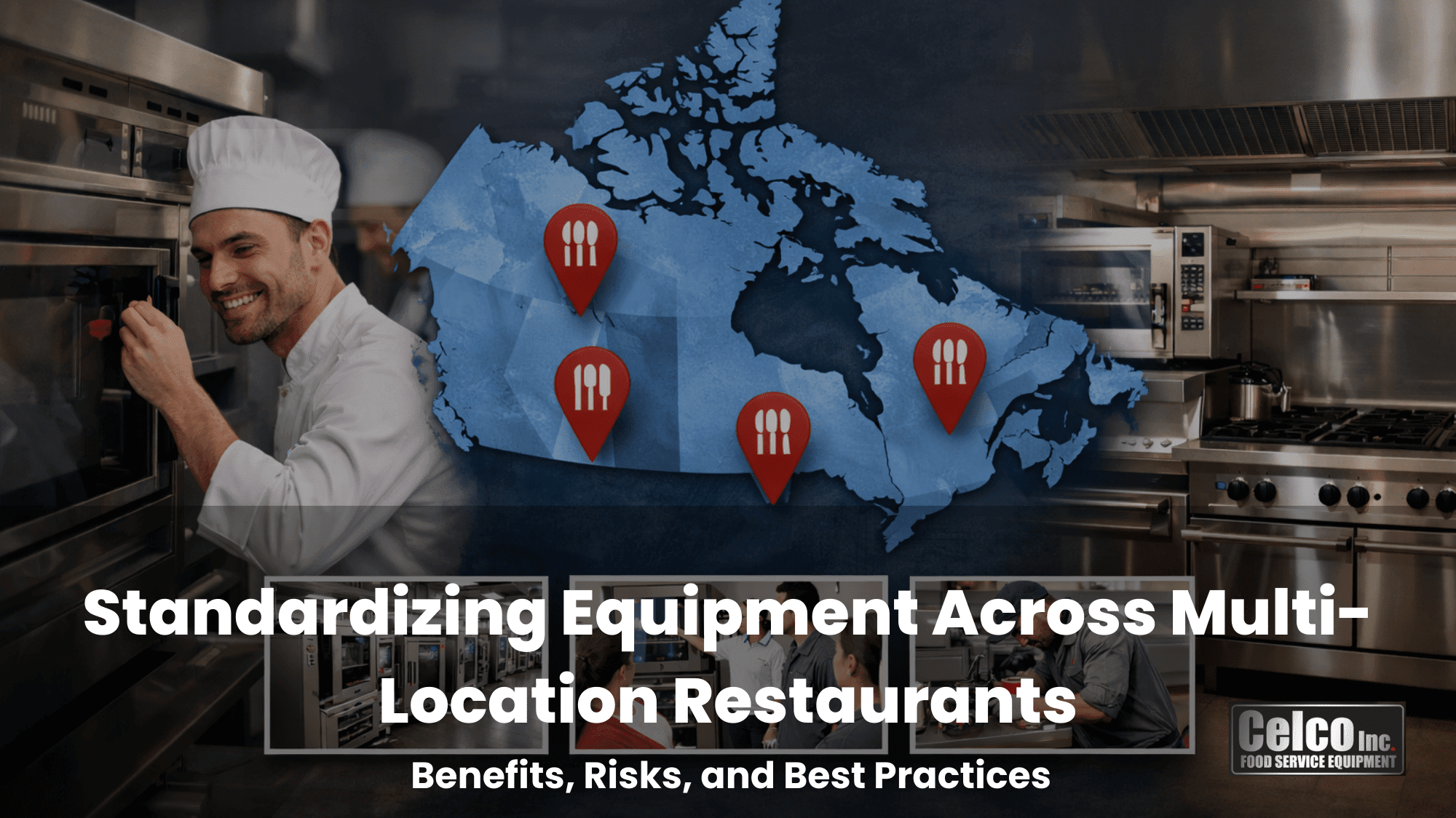

For operators of restaurant chains and multi-location brands, uniform quality and predictable operations are critical competitive advantages. Yet one issue quietly undermines both: inconsistent commercial kitchen equipment across locations.
When each kitchen runs on different models, brands, or layouts, inefficiencies compound. Training slows, maintenance costs rise, food quality drifts, and scaling becomes harder with every new opening.
This guide explains when equipment standardization for restaurants makes sense, where it introduces risk, and how to implement it strategically without sacrificing flexibility. Standardizing core kitchen systems isn’t a tactical upgrade—it’s a structural decision that directly impacts scalability, margins, and brand consistency.
Core Benefit 1: Driving Operational Efficiency & Cost Control
Standardized multi-location restaurant equipment is a direct lever for profitability. Operationally, it creates a uniform environment that streamlines every process.
- Reduced Training Time Across Locations: When kitchens are identical, staff can transfer between locations without retraining. This reduces onboarding time by up to 50% for new hires and provides immense scheduling flexibility, directly lowering labor costs.
- Lower Maintenance Complexity and Faster Repairs: Using the same models enables a single spare parts inventory and one trusted service partner. Maintenance teams can make faster, more cost-effective repairs without waiting for unique components, keeping all locations running smoothly.
- Stronger Negotiating Power With Suppliers: Standardizing on specific brands and models allows you to negotiate volume discounts with suppliers, transforming equipment procurement from a recurring expense into a strategic investment with clear long-term savings.
Real-world results consistently show the impact of standardization. In one 12-location pizza chain, standardizing deck ovens and dough presses led to a 40% reduction in cross-training time, a 30% decrease in maintenance-related downtime, and meaningful volume discounts during their next expansion phase.
Core Benefit 2: Guaranteeing Food Quality & Brand Consistency
Your brand promise hinges on the customer receiving the same experience at every table. Equipment standardization is the physical guarantee of that promise.
- Precision in Every Batch: High-precision combi-ovens, blast chillers, and fryers ensure consistent cooking parameters across all sites. This removes human error, guaranteeing the same perfect crust, consistent fry, or chilled salad at location one or one hundred.
- Automate Safety & Compliance: Modern, standardized digital platforms can automate temperature logging for refrigeration and cooking processes. This provides portfolio-wide visibility, allowing managers to identify a failing walk-in cooler before it affects food safety, and simplifies health audits across all branches.
- Portion & Cost Accuracy: Standardized tools, from countertop scales to beverage dispensers, ensure uniform portion sizes. This maintains customer expectations and enables razor-sharp, accurate central food-cost forecasting.
Navigating the Pitfalls: How to Standardize Without Stifling Flexibility
A rigid, one-size-fits-all approach can backfire. The most common risks include over-standardization that limits local menu innovation, supplier dependence that creates exposure to pricing or availability risks, and misalignment with unique kitchen footprints in older locations.
The solution is intentional standardization, not blanket uniformity. Leading operators standardize approximately 80% of equipment used for core menu execution, food safety, and throughput, while preserving 20% of flexibility for local menu items, regional demand, or spatial constraints.
Your Blueprint for Success: 3 Steps to Implement a Standardization Strategy
Step 1: Conduct a Core Process Audit
Map your highest-volume and highest-margin menu items back to the specific commercial foodservice equipment required to execute them consistently. Prioritize equipment that directly impacts food quality, safety compliance, and service speed.
Step 2: Design for Modularity and Scale
Select equipment platforms with modular configurations, proven service networks, and long-term parts availability to reduce risk as your footprint expands.
Step 3: Partner With a Specialist
National equipment planning partners bring scale, leverage, rollout coordination, and specification discipline that individual-location purchasing simply cannot match.
Build Your Foundation for Scalable Growth
For multi-unit restaurants, equipment standardization is not an operational detail—it’s a structural choice that shapes performance, profitability, and growth.
When executed intentionally, standardization transforms kitchens from reactive cost centers into predictable, scalable systems. The challenge lies in balancing consistency with flexibility while coordinating rollout across multiple locations.
This is where experienced planning partners like Celco add the most value. Before inefficiencies become embedded in your next opening, a professional review of your equipment strategy can help ensure your growth is built on consistency, control, and long-term resilience.
Planning your next location or evaluating existing kitchens? A focused review of equipment standardization can clarify where alignment creates value—and where flexibility should remain. Call Celco today for expert advice and high-quality equipment for multi-location restaurants.